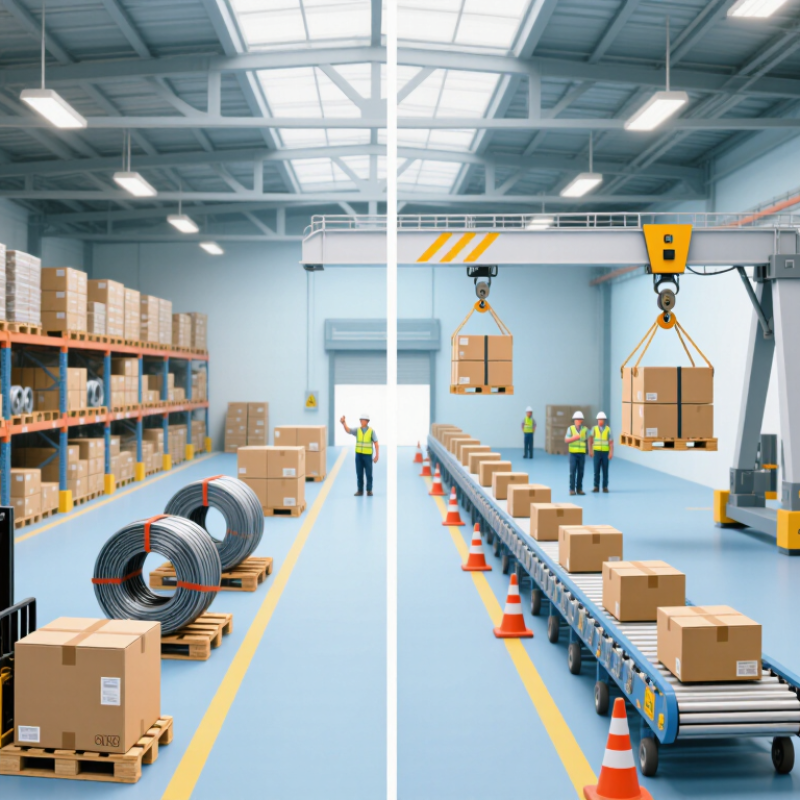
2026 How to Transport Heavy Goods Safely in Warehouses?

Time:2026-10-24 Author:Ethan
0%

Moving heavy goods is not simply a strength test. It is a controlled process involving people, equipment, floors, racks, and time. In 2026, warehouses face faster order cycles, larger loads, and growing pressure to reduce handling injuries. That pressure can encourage shortcuts. Shortcuts cost more. A safe plan begins by asking how to transport heavy goods safely in warehouses, then matching the answer to the actual site. A steel coil, boxed motor, and mixed pallet each behave differently during movement. Weight labels alone do not reveal shifting centers of gravity or damaged packaging. Experienced supervisors inspect the load, route, and equipment before the first lift.

This guide explains practical methods for planning, lifting, moving, and placing heavy goods. It considers forklifts, pallet trucks, cranes, conveyors, pedestrian zones, and loading docks. Operators should follow training requirements, equipment manuals, inspection schedules, and applicable local safety rules. A clear route matters. So does visibility. One blocked aisle or wet floor can turn a routine transfer into a serious incident. Use rated equipment, secure unstable items, and keep hands away from pinch points. Communication should remain simple, especially near reversing vehicles or blind corners.

No warehouse procedure works perfectly every day. Batteries weaken, labels peel, and teams occasionally misjudge a load. That reality deserves attention, not blame. Regular observations, near-miss reviews, and honest feedback help correct weak habits before someone gets hurt. The recommendations ahead combine operational experience with established safety principles. They are practical, but they still require site-specific assessment. Careful movement protects workers, inventory, racks, vehicles, and delivery schedules.

2026 How to Transport Heavy Goods Safely in Warehouses?

Understanding Heavy Goods and Warehouse Transport Risks

Heavy goods create risks that are easy to underestimate. A pallet may look stable, yet its center of gravity can shift during movement. Uneven weight distribution can make a loaded truck or cart lean suddenly. Wet floors, damaged pallets, and narrow aisles increase this danger. So do poor lighting and blind corners.

In daily warehouse operations, trained supervisors should check the load before transport begins. They should confirm the weight, dimensions, pallet condition, and travel route. The floor must support the combined weight of the goods and equipment. Operators need clear visibility, controlled speed, and enough space to stop. Pedestrian routes should remain separate whenever practical. Warning signals help, but they cannot replace attention.

Small details matter. A loose strap can catch on shelving. A cracked wheel can change direction under pressure. Manual handling also creates strain when workers twist or rush. Use suitable lifting equipment and keep hands away from pinch points. Inspect equipment at the start of each shift. Record defects and remove unsafe equipment from service. Even experienced teams miss things. A checklist is not magic. It only works when people use it honestly, including during busy periods. Teams should review near misses without blame, because a minor contact today may reveal a serious transport risk tomorrow.

2026 How to Transport Heavy Goods Safely in Warehouses? - Understanding Heavy Goods and Warehouse Transport Risks

Practical warehouse transport risk data and control measures for heavy goods. Values are general planning references and should be verified against the site layout, equipment specifications, load characteristics, and applicable local regulations.

Typical warehouse planning references; actual limits must be confirmed through a documented site risk assessment.
Risk Area Typical Heavy-Goods Condition Main Transport Risk Initial Risk Level Recommended Control Measures Verification Indicator Responsible Role
Load weight Single unit above 500 kg or a combined pallet load approaching the rated capacity of the handling equipment Equipment overload, dropped load, structural failure, or loss of steering control High Confirm gross weight before movement; check the equipment load chart; keep the load center within the rated limit; never exceed the lowest rated component in the lifting system Weight verified before dispatch Warehouse supervisor and equipment operator
Load stability High center of gravity, uneven distribution, flexible packaging, or unsecured components Load shift during braking, turning, lifting, or travel over uneven surfaces High Place the heaviest items low; center the load; use rated straps, chocks, edge protection, or containment; perform a low-height stability check before full travel No visible movement during test Operator and load planner
Forklift capacity Rated capacity decreases when the load center increases or the load is lifted higher Forward tipping, rear-wheel lift, mast instability, or dropped goods High Use the actual capacity plate for the attachment and load center; keep the load low while travelling; use only trained and authorized operators Capacity check recorded Shift supervisor
Pedestrian interaction Shared aisles, blind corners, crossing points, or temporary work zones Collision, crushing, foot injury, or contact with a falling load High Separate pedestrian and vehicle routes where practicable; use barriers, marked crossings, mirrors, warning signs, horns, and exclusion zones during heavy-load movement Route inspection completed Traffic coordinator
Travel speed Heavy or oversized loads requiring longer stopping distances and slower turns Loss of control, load swing, collision, or impact with storage infrastructure Medium–High Set site-specific speed limits; reduce speed at corners, ramps, doorways, and intersections; maintain a clear stopping distance and avoid sudden braking Speed observations within limit Fleet or warehouse supervisor
Aisle clearance Load width or turning radius reduces clearance from racks, walls, doors, or other vehicles Racking impact, product damage, trapped personnel, or vehicle overturn Medium–High Measure the load and equipment envelope; confirm turning clearance before movement; remove obstructions; use a spotter where visibility is restricted Clearance confirmed on route plan Route planner and spotter
Floor condition Wet, damaged, uneven, contaminated, or sloped floor surfaces Skidding, wheel damage, load instability, or reduced braking performance Medium–High Inspect and clean the route; repair significant defects; check floor load limits; use suitable wheels and maintain controlled speed on ramps Pre-use route inspection passed Facilities team and supervisor
Lifting accessories Slings, shackles, hooks, clamps, spreader beams, or lifting points used with heavy goods Accessory failure, uncontrolled load rotation, or load release High Use accessories with legible rated capacity; inspect before use; protect slings from sharp edges; keep personnel outside the suspended-load area Inspection status current Lifting supervisor
Manual handling Heavy, bulky, unstable, or difficult-to-grip items requiring positioning or adjustment Musculoskeletal injury, pinch points, dropped goods, or unexpected load movement Medium–High Eliminate manual lifting where possible; use pallet trucks, hoists, rollers, or lift tables; plan team movements and keep hands away from pinch points Mechanical aid used where required Area supervisor
Racking and storage Heavy goods stored at height or placed on pallets near the maximum permitted bay load Racking deformation, pallet collapse, falling objects, or progressive structural failure High Display bay load limits; place heavier goods at lower levels where appropriate; inspect frames, beams, pallets, and guards; quarantine damaged components Weekly visual inspection logged Storage manager
Communication Operator visibility obstructed by a large load or route includes multiple teams Miscommunication, unexpected entry into the route, or incorrect placement Medium–High Use agreed hand signals or reliable radio communication; appoint one signal person; stop the movement if communication is lost Pre-movement briefing completed Movement lead
Emergency response Dropped load, vehicle collision, equipment failure, or blocked emergency access Delayed rescue, secondary collision, exposure to unstable goods, or uncontrolled area access Medium–High Stop work, isolate the area, prevent re-entry, report the incident, and use a documented recovery plan; keep emergency routes and exits unobstructed Drill or response review completed Emergency coordinator
High Risk
Stop or redesign the task until effective controls are in place.
Medium–High Risk
Apply additional controls and obtain supervisor approval before movement.
Core Rule
Do not move a heavy load if its weight, stability, route, or equipment capacity is uncertain.

Assessing Loads, Routes, Equipment, and Workplace Conditions

How to Transport Heavy Goods Safely in Warehouses?

Safe heavy-goods movement starts with the load, not the vehicle. Check weight, dimensions, center of gravity, and packaging before lifting. A damaged pallet can shift without warning. The U.S. Bureau of Labor Statistics recorded 1,495 fatal injuries among transportation and material-moving occupations in 2023. This figure is not warehouse-specific, but it shows the exposure clearly.

Routes need equal attention. Measure aisle width, floor strength, turning space, visibility, and pedestrian crossings. Remove loose film, water, and broken boards. Separate people from moving equipment wherever possible. A route may look clear on paper. It can still fail during a blind turn.

I would not approve a route after one inspection only. Conditions change during every shift. Workplace transport remains a major concern in the UK Health and Safety Executive’s fatal injury data, especially where vehicles and pedestrians interact.

Tips: Use a written load assessment before movement. Mark the travel path and set a walking speed. Keep loads low and stable. Stop when visibility is blocked. Recheck wheels, forks, brakes, alarms, and battery condition daily. Train operators with practical scenarios, not slides alone. Record near misses, including small pallet slips. They often reveal weak controls earlier than injuries do. One uncomfortable question matters: can a new worker understand this route without guessing?

Selecting and Inspecting Equipment for Safe Goods Movement

Safe heavy-goods movement begins before equipment reaches the loading zone. Select a truck, hoist, pallet jack, or lifting accessory for the real load, not an average estimate. Record the weight, dimensions, center of gravity, and travel route. An uneven floor can turn a stable load into a moving hazard. Keep capacity markings visible. Never guess.

Inspect equipment at the start of every shift and after unusual impact. Check wheels, forks, chains, hooks, guards, brakes, batteries, and hydraulic leaks. Look for bent metal, loose fasteners, worn straps, and cracked welds. Test controls without a load first. A strange sound deserves attention. Remove damaged equipment from service and report it clearly.

Before lifting, confirm that the load is balanced and secured against sliding. Keep hands away from pinch points and maintain a clear line of sight. Spotters can help around blind corners, but they need agreed signals and enough space to stand safely. Operators should move slowly near racks, doors, and floor changes. I have seen teams trust a familiar machine too quickly; routine can hide defects. A checklist helps, but it is not magic. Supervisors should review inspection records, refresh practical training, and question shortcuts when production pressure rises. Even experienced workers can misjudge a load after a long shift.

Planning Step-by-Step Handling, Lifting, and Transportation Procedures

2026 How to Transport Heavy Goods Safely in Warehouses?

Moving heavy goods safely starts before anyone touches the load. Supervisors record weight, dimensions, center of gravity, and lifting points. They inspect pallets, straps, forks, hoists, and floor conditions. A damaged pallet is removed, not “used carefully.” The route is measured for door width, turning space, lighting, and overhead clearance. People stay outside the travel path. Marked zones help, but they do not replace active supervision.

Before lifting, the team assigns one trained operator and one signal person. Everyone agrees on simple hand signals or radio commands. The operator tests balance with a short, low lift. If the load tilts, the team lowers it and reassesses the setup. Keep hands and feet away from pinch points. Move slowly near corners, ramps, and blind intersections. Stop when visibility disappears. Never improvise with damaged equipment or an uncertain load rating.

In daily operations, short pauses prevent small errors from becoming injuries. We check strap tension after movement begins and inspect the load before storage. A temporary barrier may need adjustment as traffic changes. We once planned a clear route that became blocked by empty packaging. The delay exposed a weakness in our housekeeping routine. That mistake changed our practice. Supervisors now walk the route immediately before transport and record near misses, not only accidents.

2026 How to Transport Heavy Goods Safely in Warehouses?

Planning Step-by-Step Handling, Lifting, and Transportation Procedures

The chart shows the NIOSH Recommended Weight Limit (RWL) for a two-handed lift as the horizontal reach increases. The calculation uses the Revised NIOSH Lifting Equation with a 51 lb load constant, a 30-inch vertical origin, a 25-inch vertical travel distance, good hand-to-object coupling, and a single lifting task performed once every five minutes or less. Keeping loads close to the body reduces lifting risk and supports safer warehouse handling procedures. Source: CDC/NIOSH Revised NIOSH Lifting Equation.

Training Workers and Monitoring Warehouse Transport Safety

How to Transport Heavy Goods Safely in Warehouses in 2026

Training must reflect real warehouse conditions, not a perfect classroom exercise. The U.S. Occupational Safety and Health Administration estimates that powered industrial trucks cause about 85 deaths and 34,900 serious injuries annually. Workers need hands-on practice with uneven floors, blind corners, unstable pallets, and changing pedestrian routes. Short refreshers should cover load limits, center of gravity, reversing signals, and safe distance. Show the risk physically. A leaning pallet teaches faster than a slide.

Keep training practical.

Supervisors should monitor behavior after certification. Use daily checks for damaged racks, blocked walkways, poor lighting, and unsecured loads. Record near misses, not only injuries. The International Labour Organization reported nearly 3 million work-related deaths globally in 2023, with many incidents linked to preventable workplace hazards. Local data may look smaller, but one dropped load can still change a family permanently. Cameras and telematics can identify speeding or harsh braking, yet numbers need context. A worker may hurry because schedules are unrealistic.

Local data may look smaller, but one dropped load can still change a family permanently.

A checklist is not proof of safety. It can be completed neatly while a pedestrian walks through a vehicle lane. Managers should review footage, interview workers, and compare planned routes with actual movement. Training also needs honest correction. Our drills may be too tidy. Real improvement begins when workers can report confusing signs, damaged equipment, or pressure to take shortcuts without fear.

FAQS

What should workers check before moving heavy goods?

Check the load’s weight, dimensions, center of gravity, and packaging. Inspect the pallet, straps, forks, and lifting points. A damaged pallet should be removed. Do not “use it carefully.”

How can a warehouse route be prepared safely?

Measure aisle width, turning space, door clearance, lighting, and floor strength. Remove water, loose wrapping, and broken boards. Walk the route before transport. Paper plans can miss real obstacles.

What should happen if the load blocks visibility?

Stop immediately. Lower the load if necessary. Use a trained signal person or change the route. Never continue through a blind corner by guessing.

How should people and moving equipment be separated?

Keep pedestrian routes outside the travel path whenever practical. Mark crossings and use temporary barriers when needed. Barriers help. They do not replace attention or supervision.

What equipment checks are important before each shift?

Inspect wheels, brakes, forks, alarms, batteries, straps, and lifting devices. Record defects clearly. Remove unsafe equipment from service. A cracked wheel can suddenly change direction.

How can teams reduce manual handling injuries?

Use suitable lifting equipment for heavy or awkward goods. Keep hands and feet away from pinch points. Avoid twisting, rushing, or carrying beyond a safe view. Short pauses matter.

What should operators do when a load tilts during lifting?

Stop and lower the load carefully. Recheck balance, weight distribution, lifting points, and equipment capacity. Do not force the movement. The setup may be wrong.

Why should warehouses record near misses?

Near misses can expose weak controls before someone is injured. Record small pallet slips, blocked routes, and minor contacts. Review them without blame. We may still overlook something.

What makes a heavy-goods transport procedure effective?

Assign one trained operator and one signal person. Agree on simple hand signals or radio commands. Move slowly near ramps and corners. Recheck the route immediately before transport. A checklist is not magic.

Conclusion

Transporting heavy goods safely in warehouses requires a clear understanding of load weight, size, stability, and potential hazards. Before moving any item, workers should assess the load, inspect the route, and identify risks such as uneven floors, narrow aisles, poor lighting, obstacles, and nearby personnel. Suitable handling equipment must be selected according to the load and working environment, then checked for damage, capacity limits, secure attachments, and reliable controls before use.

A safe process should include planning each lifting and transportation step, keeping loads balanced, securing loose items, maintaining clear visibility, and moving at controlled speeds. Workers should communicate effectively, follow designated routes, and avoid standing under raised goods or entering unsafe operating zones. Regular training, practical demonstrations, equipment inspections, and safety monitoring help reinforce correct behavior and identify problems early. By combining careful planning, appropriate equipment, and continuous worker awareness, warehouses can improve how to transport heavy goods safely in warehouses while reducing injuries, product damage, and operational disruptions.

Ethan

Ethan

Ethan is a seasoned marketing professional with a deep expertise in our company's innovative product line. With a passion for sharing knowledge and insights, he takes the lead in regularly updating our corporate blog, where he explores industry trends, product features, and effective marketing......