In the logistics and transportation industry, choosing the right equipment is crucial for efficiency. When deciding between a tail lift and a loading ramp, many wonder, "what is the difference between tail lift and loading ramp?" According to industry expert John Smith, "Understanding your specific needs can greatly influence your choice between these two options."
Tail lifts and loading ramps serve the same fundamental purpose: facilitating loading and unloading. However, their designs and functionalities vary. Tail lifts are typically integrated into vehicles, offering a hydraulic mechanism for lifting cargo directly from ground level. Conversely, loading ramps are standalone structures that allow for a gradual incline, making it easier to roll heavy items onto trucks or storage areas.
Each option has its advantages and limitations. Tail lifts can be more convenient for quick loading operations, while loading ramps are often favored for their stability and lower maintenance. Sometimes, the choice is not straightforward. Users may face issues like weight limitations or space constraints. Both solutions have their place in the industry, and understanding their differences is essential for making an informed decision.
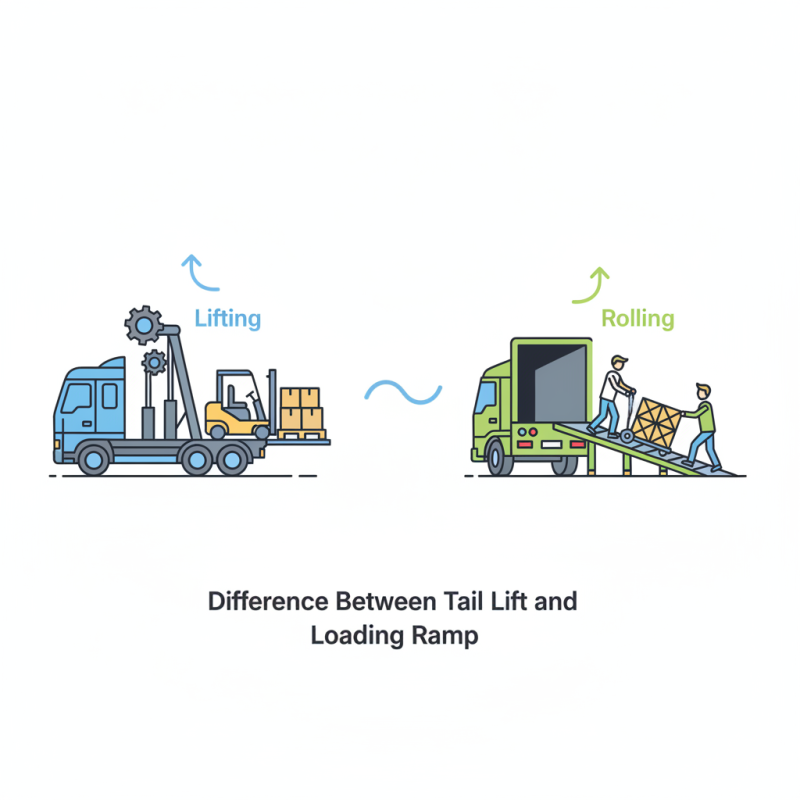
Understanding Tail Lifts: Features and Benefits
Tail lifts are essential equipment for various industries. They simplify loading and unloading goods from vehicles. These devices are particularly useful for heavy or bulky items. According to industry reports, nearly 70% of logistics companies utilize tail lifts to enhance their operational efficiency. Their powered mechanisms reduce the risk of injuries during manual handling tasks.
The design of tail lifts allows for smooth transitions between ground and vehicle height. This feature is crucial when dealing with uneven surfaces. Additionally, many tail lifts have weight capacities ranging from 1,000 to 6,000 pounds. This versatility makes them appealing in sectors like retail and construction. However, not all tail lifts are created equal. Maintenance is key for performance, and overlooking it can lead to safety concerns.
Choosing a tail lift over a loading ramp often hinges on specific operational needs. Loading ramps may be more suitable for lighter loads or when the ground is consistent. Still, they lack the powered convenience of tail lifts. Assessing the frequency and type of usage can guide operators in making the best choice for their needs. Misalignment of equipment with operational requirements can lead to inefficiencies. Thoughtful consideration is required when selecting between these two options.
Difference Between Tail Lift and Loading Ramp What to Choose?
| Feature |
Tail Lift |
Loading Ramp |
| Operation Method |
Hydraulically operated |
Manual or mechanical |
| Loading Capacity |
Up to 2,000 kg |
Varies, typically up to 1,500 kg |
| Ease of Use |
Easier for heavy loads |
Requires manual effort |
| Space Requirement |
Needs more vehicle space |
Minimal space required |
| Maintenance |
Requires regular hydraulic checks |
Less maintenance required |
Exploring Loading Ramps: Types and Uses
When choosing between tail lifts and loading ramps, understanding the different types of loading ramps is essential. Each type serves specific functions and industries. For instance, portable loading ramps are ideal for small businesses that require mobility. They weigh less and are often made of aluminum, making them easy to transport. A survey revealed that nearly 45% of small businesses favored aluminum due to its durability and light weight.
In contrast, fixed loading ramps are more common in manufacturing and warehousing. These ramps typically handle heavier loads, often exceeding 5,000 pounds. According to the National Association of Wholesaler-Distributors, the demand for fixed ramps has increased by 30% in the last five years. The durability of steel ramps is a key selling point, but they require more space and installation.
Safety should never be overlooked. Studies indicate that improper use of loading ramps leads to accidents in about 15% of cases. This highlights the need for proper training and adherence to guidelines when using loading equipment. While the convenience of ramps is undeniable, businesses must carefully evaluate their needs and choose the right option accordingly.
Key Differences Between Tail Lifts and Loading Ramps
When deciding between a tail lift and a loading ramp, it's essential to consider their key differences. Tail lifts, often mounted on the back of vehicles, provide a convenient solution for loading and unloading heavy items. They can handle various weights and are ideal for businesses that frequently transport bulky goods. Their hydraulic or electric mechanisms make lifting easy, but they require maintenance and can be costly to repair.
On the other hand, loading ramps are versatile and can be used in different environments. They are typically portable and can be adjusted to various heights. This flexibility makes them suitable for diverse loading scenarios. However, ramps may not support as much weight as a tail lift. Users must ensure stability during operations, as improper setup can lead to accidents. Choosing the right equipment largely depends on your specific needs and constraints. Each option has distinct advantages and drawbacks, so weighing these carefully is paramount.
Difference Between Tail Lift and Loading Ramp
This chart compares key attributes between Tail Lifts and Loading Ramps, highlighting differences in weight capacity, loading time, cost, and space required. Tail Lifts generally offer greater weight capacity and faster loading times, while Loading Ramps are more space-efficient and economical.
Factors to Consider When Choosing Between the Two
When choosing between a tail lift and a loading ramp, several factors come into play. The primary consideration is the type of vehicles used for loading and unloading. Tail lifts are ideal for vehicles with limited space, offering a compact design. Conversely, loading ramps provide flexibility for various vehicle heights, making them suitable for a wider range of applications.
Another important factor is the weight capacity. Tail lifts usually have a specific maximum weight limit. Ensure you understand this before making a decision. Loading ramps, however, can accommodate different weights based on their construction material and design. Assess the loads you frequently handle to guide your choice.
Tip: Consider the type of cargo you transport.
Fragile items may benefit from the gradual incline of a ramp.
Heavy machinery might require the robustness of a tail lift.
Tip: Think about long-term usage. If the loading conditions vary frequently, a ramp may adapt better than a fixed tail lift. Reflect on your operations regularly to adjust your equipment needs.
In summary, weighing these factors can help you choose the option that best suits your requirements. Both tail lifts and loading ramps have their strengths and weaknesses.
Cost-Effectiveness and Maintenance of Tail Lifts vs. Ramps
When considering the cost-effectiveness of tail lifts versus loading ramps, maintenance plays a crucial role. Tail lifts often involve higher initial investment. The average cost for a tail lift can range from $5,000 to $10,000. This includes installation expenses. Ramps, on the other hand, usually require a one-time payment of about $1,500 to $3,000. However, the ongoing maintenance for tail lifts can add up. Reports suggest that annual maintenance costs for tail lifts can reach $1,200, while ramps typically incur around $300 yearly.
Furthermore, the reliability of each option must be assessed. Tail lifts boast a higher weight capacity, often supporting loads over 6,000 lbs. Yet, they are prone to mechanical failures. Data shows that 20% of tail lift-related incidents are due to malfunctions. Ramps are simpler and thus less likely to fail, but their maximum capacity usually hovers around 3,000 lbs. A significant point of reflection lies in user needs. Businesses should evaluate load types, frequency of use, and long-term operational costs before deciding between the two. Each choice has trade-offs that require careful consideration.
FAQS
: Tail lifts help load and unload heavy or bulky goods from vehicles easily.
They reduce the risk of injuries during manual handling tasks.
Most tail lifts support weights between 1,000 to 6,000 pounds.
If handling lighter loads or when ground conditions are consistent, a ramp may be better.
Consider vehicle type, weight capacity, and frequency of use.
Proper maintenance is key; neglect can lead to safety issues or malfunctions.
Yes, tail lifts typically cost more initially and require higher annual maintenance.
Yes, ramps vary in weight capacity based on their materials and design.
Yes, evaluating operational needs can prevent inefficiencies and poor equipment alignment.
Yes, mechanical issues account for about 20% of tail lift incidents, so caution is needed.
Conclusion
The article "Difference Between Tail Lift and Loading Ramp: What to Choose?" provides a comprehensive overview of the distinct features and benefits of tail lifts and loading ramps. Tail lifts are hydraulic systems attached to vehicles that facilitate the loading and unloading of heavy cargo, offering convenience and efficiency. In contrast, loading ramps are inclined surfaces designed for easier access to vehicles or structures, with various types tailored to specific needs.
A key focus of the article is on identifying "what is the difference between tail lift and loading ramp," emphasizing their operational differences, types, and applications. Additionally, it explores important factors to consider when choosing between the two options, including cost-effectiveness and maintenance requirements, helping users make informed decisions based on their operational needs. Understanding these differences is crucial for selecting the right equipment for safe and efficient cargo handling.

 DLI AutoLogix