Warehouses move quickly: forklifts turn through narrow aisles, pallets rise above workers, and shift changes can leave hazards unnoticed. Improving safety takes more than signs and annual training. It requires clear traffic routes, well-maintained equipment, practical coaching, and supervisors who respond when workers report a risk. Small details matter. A blocked exit or a damaged pallet can change an ordinary shift in seconds.
The U.S. Bureau of Labor Statistics reported a 4.4 recordable injury and illness rate per 100 full-time workers in transportation and warehousing in 2023, compared with 2.4 across private industry. The figures cover a broad sector, not warehouses alone, but they show why prevention deserves steady attention. OSHA identifies hazards such as powered industrial truck incidents, falls, and struck-by injuries in warehousing. These risks often share familiar causes: poor visibility at intersections, rushed handling, or unclear pedestrian routes. Procedures can look complete on paper and still fail at a busy loading dock.
Paul O’Neill, former Alcoa chief executive and a prominent safety-focused operations leader, set a clear standard: “I intend to make Alcoa the safest company in America. I intend to go for zero injuries.” His words point toward a useful ambition, though no slogan replaces daily checks and honest reporting. This guide explores how to improve safety standards in warehouse operations through hazard assessment, worker involvement, equipment controls, and measurable follow-up. The work is never finished. A safer warehouse depends on noticing what routines may have taught everyone to overlook.
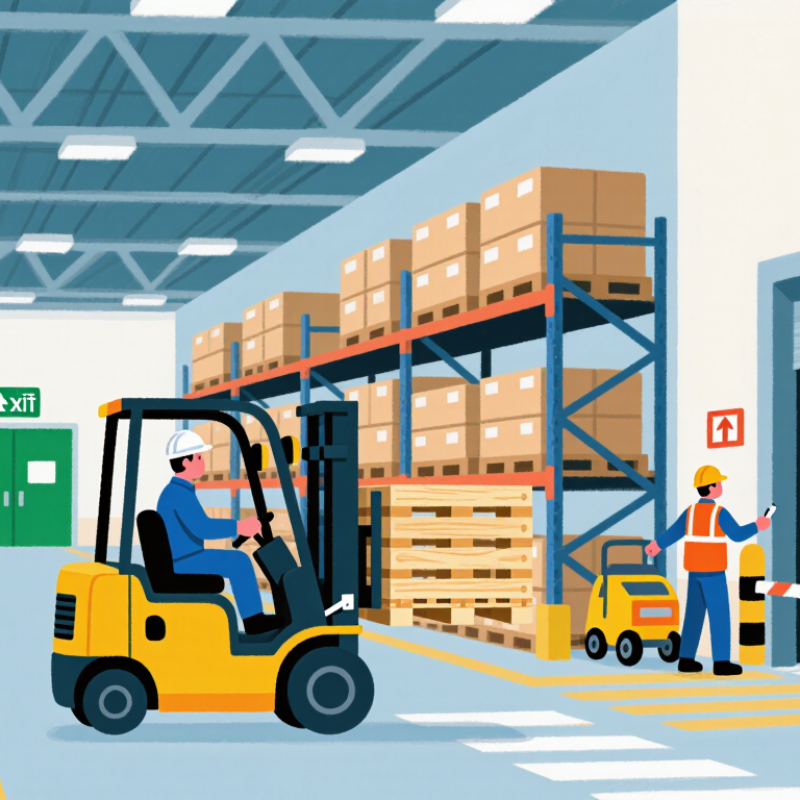
How to Improve Warehouse Safety Standards
Assess Warehouse Hazards and Identify Safety Gaps
A useful warehouse assessment starts on the floor, during a busy shift. Watch how workers move around forklifts, pallet racks, loading docks, and blind corners. Record blocked exits, damaged rack beams, unstable loads, and spills that remain after cleanup. Ask workers where near misses happen; their answers may reveal risks a checklist misses.
The stakes are measurable. The U.S. Bureau of Labor Statistics reported 4.3 injury and illness cases per 100 full-time workers in transportation and warehousing in 2023, compared with 2.4 across private industry. OSHA estimates forklifts cause about 85 fatal accidents and 34,900 serious injuries each year. These figures make traffic routes, pedestrian crossings, and operator visibility essential assessment points.
Look for gaps between written procedures and real practice. Are mirrors obscured by stacked cartons? Do workers reach above shoulder height because frequently used goods sit too high? Check training records, maintenance logs, incident reports, and shift-specific conditions. Then rank hazards by likely severity and exposure, and assign an owner and due date to each corrective action. A tidy audit form can create false confidence. I have to admit, a single walk-through cannot show every risk; repeat inspections across shifts, especially during peak volume.
Illustrative warehouse hazard assessment. Use site-specific inspections, incident records, and applicable local requirements to verify findings and set corrective-action deadlines.
| Area or Activity | Hazard Identified | Observed Safety Gap | Potential Consequence | Risk Level | Recommended Corrective Action | Suggested Owner | Target Timeframe |
|---|---|---|---|---|---|---|---|
| Forklift and pedestrian routes | Vehicle-pedestrian interaction at aisle crossings | Floor markings are faded in two crossing areas; one crossing has limited sight lines. | Collision, crush injury, or a serious near miss | High | Repaint pedestrian lanes and crossing lines; install suitable mirrors or other visibility controls; review routes and speeds with operators and pedestrians. | Warehouse manager | Within 7 days |
| Racking and storage | Unstable loads or damaged rack components | One upright has visible impact damage, and a pallet in an upper bay extends beyond the rack beam. | Falling materials, rack failure, or struck-by injury | High | Restrict access around the affected bay; unload and inspect it; arrange competent repair or replacement; check that loads are stable and within posted limits. | Facilities lead | Immediately; verify within 24 hours |
| Housekeeping and aisles | Slip, trip, and blocked-route hazards | Stretch wrap and empty cartons were present near an aisle end; a marked pedestrian route was partially obstructed. | Trips, falls, or delayed evacuation | Medium | Remove debris promptly, keep designated routes clear, and introduce documented shift-start and shift-end housekeeping checks. | Shift supervisor | Clear immediately; checks each shift |
| Loading dock | Falls from dock edge and trailer movement | A dock position was open during a trailer change, and the inspection log did not show a completed restraint check. | Fall from height, crushing, or vehicle movement incident | High | Keep unused dock positions protected; use the site's approved vehicle-restraint and communication procedures; document checks before loading or unloading. | Dock supervisor | Before next loading operation |
| Emergency exits and equipment | Obstructed access to emergency provisions | Two cartons were stored in front of a fire extinguisher; the nearest exit route was clear at the time of inspection. | Delayed response to fire or other emergency | Medium | Remove stored items, keep access and exit routes unobstructed, and include emergency equipment access in routine inspections. | Area lead | Immediately |
| Manual handling | Awkward lifting and repetitive handling | Frequently handled bulky cartons are stored below knee height; task-specific handling guidance is not readily available. | Back, shoulder, or other musculoskeletal strain | Medium | Review task frequency and load characteristics; reposition suitable items where practicable; provide appropriate handling aids and task-specific instruction. | Operations lead | Within 30 days |
| Pedestrian doors and visibility | People entering vehicle travel areas without warning | A pedestrian door opens close to a forklift route, and no warning signage is posted on the warehouse side. | Pedestrian struck by a moving vehicle | Medium | Assess door and vehicle-route separation; add clear warning signs and suitable visibility controls; brief employees on the crossing procedure. | Safety coordinator | Within 14 days |
| Forklift pre-use checks | Equipment defects not identified before operation | Pre-use check forms were incomplete for two sampled shifts. | Equipment failure, collision, or loss of load control | Medium | Reinforce checks before use, provide accessible forms, and ensure reported defects are assessed and equipment is taken out of service when necessary. | Fleet supervisor | Start next shift; review weekly |
| Spill response | Wet or contaminated floor surfaces | A spill kit was present, but the inventory check was overdue and the response instructions were not displayed nearby. | Slip, fall, or contact with a hazardous substance | Low | Check and replenish the spill kit; post clear response instructions; ensure employees know how to report spills and when to seek trained assistance. | Safety coordinator | Within 7 days |
Risk levels: High = prompt controls are needed; Medium = corrective action should be planned and tracked; Low = maintain controls and monitor. Reassess risks after significant changes, incidents, or corrective actions.
Watch workers move around forklifts, pallet racks, loading docks, and blind corners. Record spills, blocked exits, damaged beams, and unstable loads. Ask workers where near misses happen.
Observe real work during busy shifts and across different shifts. Compare written procedures with what workers actually do. One walk-through is not enough.
Mark pedestrian lanes and crossings clearly. Place mirrors near blind corners, and leave turning space at aisle ends. Check whether workers can follow routes during a busy shift.
Check forklift brakes, warning devices, and forks for visible damage. Look for bent rack supports and loads above posted capacities. Small defects matter.
Keep frequently picked items between knee and shoulder height. Store heavier goods low, and use carts or lift tables for difficult lifts. Recheck the setup when inventory changes.
Track near misses, first-aid cases, ergonomic complaints, and forklift-pedestrian conflicts. Sort findings by shift and work zone. Site-wide averages can hide one risky aisle.
Assign an owner and due date to each corrective action. Verify completed fixes on the floor, not just in a report. A tidy dashboard can still miss real problems.
Review controls when observations or worker feedback show they are failing. Recheck signs, barriers, routes, and training after changes. Peak-season overflow can undo a safe layout.
Improving warehouse safety starts with a careful review of the workplace. Identify hazards such as blocked walkways, unsafe storage, damaged equipment, and high-traffic areas, then use these findings to address gaps in existing procedures. Clear safety standards should explain how work is done, who is responsible for each task, and how concerns are reported. These expectations help create a consistent approach across teams and shifts.
Practical improvements to the facility layout, equipment, and material-handling methods can reduce everyday risks. Workers also need regular training in safe procedures, proper equipment use, and emergency response. To sustain progress, monitor incidents, inspections, and worker feedback, then review and update controls as conditions change. A steady cycle of assessment, training, and follow-up offers a practical way to understand how to improve safety standards in warehouse operations and make safety part of routine work.

 DLI AutoLogix