7 Best Industries That Use Pallet Stackers the Most?

Time:2026-09-14 Author:Mason
0%

What industries use pallet stackers the most? This question matters wherever goods move through narrow aisles, crowded loading zones, or storage areas with limited floor space. Pallet stackers are compact, practical, and easier to maneuver than many larger warehouse vehicles. They can lift pallets, position loads, and support daily handling work without demanding excessive aisle width.

Martin McVicar, managing director of Combilift, has often emphasized a basic material-handling principle: “The right equipment is the equipment that fits the application.” That idea shapes this guide. The best industries are not simply the largest warehouses. They are businesses with frequent pallet movement, moderate lifting heights, and changing storage demands. Some need precise control around food products. Others need dependable performance in manufacturing plants, retail distribution centers, cold-storage facilities, construction suppliers, or agricultural operations.

The details matter. A beverage warehouse may need stackers beside tightly packed racks. A small manufacturer may use one machine between production lines and finished-goods storage. A garden supplier may face uneven traffic, outdoor dust, and seasonal pressure. These conditions are different. One machine cannot solve every problem.

That is the imperfect part. Buying decisions sometimes focus too heavily on lifting capacity. Operator training, battery life, floor condition, and service access also deserve attention. This overview examines seven industries where pallet stackers are used most often. It also considers why their needs differ, where stackers perform well, and when another material-handling solution may be more suitable.
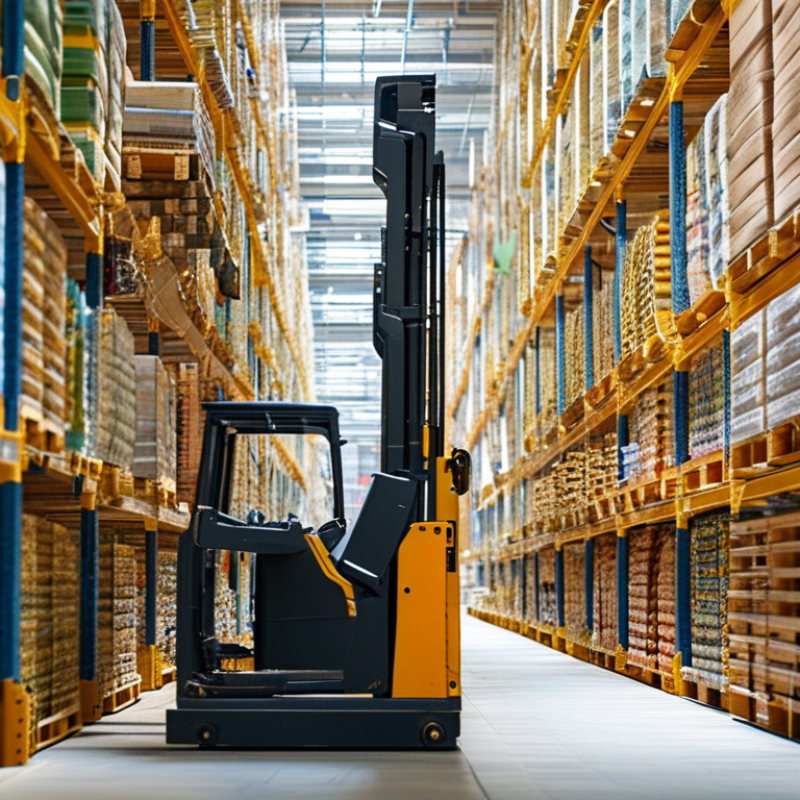
7 Best Industries That Use Pallet Stackers the Most?

Pallet Stackers: Definition, Main Types, and Operating Principles

Pallet stackers are compact lifting machines designed to raise and move palletized loads. They suit warehouses, retail backrooms, manufacturing plants, food facilities, pharmaceutical storage, agricultural operations, and construction supply areas. Unlike forklifts, many stackers operate in narrow aisles and require less turning space. Their smaller frame can be a real advantage.

The main types include walkie stackers, ride-on stackers, straddle stackers, counterbalance stackers, and reach stackers. Walkie models follow an operator on foot and work well for short movements. Ride-on versions reduce walking fatigue during longer shifts. Straddle stackers handle different pallet widths, while counterbalance models lift loads without front support legs. Reach designs extend forks into deeper rack positions.

Operating principles are straightforward but demand discipline. An electric motor powers the drive system, while a hydraulic or electric lift raises the mast and forks. The load must remain centered. Uneven weight can affect stability quickly.

Tips: Check the rated capacity before lifting. Inspect forks, wheels, brakes, controls, and battery condition each shift. Keep the load low while traveling. Move slowly near corners and blind spots. Training matters more than speed. A common mistake is trusting a clear floor too much; loose wrapping, ramps, and wet patches can still change machine behavior. Operators should also consider aisle width, rack height, pallet condition, and visibility before choosing a stacker. Small oversights become expensive lessons.

Warehousing and Distribution: High-Volume Storage and Order Handling

Warehousing and distribution centers use pallet stackers for dense storage and fast order handling. These facilities often move hundreds of pallets daily. Stackers fit narrow aisles and support short-distance transport between receiving docks, racks, and picking zones. The 2023 MHI Annual Industry Report found that warehouse automation adoption could rise from 23% to 50% within five years. That trend increases demand for compact, flexible equipment.

In practical warehouse reviews, pallet stackers work best when travel distances stay controlled. Operators can lift goods onto medium-height racks without occupying a full forklift lane. This matters during seasonal peaks, when cartons, spare parts, and packaged food arrive continuously. The U.S. Bureau of Labor Statistics recorded over 1.7 million jobs in warehousing and storage in 2023. More workers and more stock create pressure for safer, repeatable handling. Still, stackers are not a perfect answer. Poor aisle planning can cause congestion. Weak training can also create avoidable damage.

Tips: Measure aisle width before purchasing equipment. Check pallet weight, lift height, and floor conditions. Train operators on visibility and pedestrian separation. Review battery charging space, too. A small oversight there can reduce daily productivity.

Manufacturing: Moving Materials Between Production Stages

In manufacturing plants, pallet stackers move materials between production stages with less effort and better control. They carry components from receiving areas to cutting, assembly, testing, and packing zones. This reduces repeated manual lifting and keeps production lines supplied. A stacker can also place pallets in narrow storage locations when floor space is limited.

The details matter. Operators should check the load’s weight, dimensions, and center of gravity before lifting. Uneven pallets can shift during travel. Smooth floors support safer movement, while damaged surfaces may cause sudden instability. At one facility, workers used marked lanes between molding and assembly. This simple change reduced crossing traffic and made delays easier to identify. Short routes help.

Good practice includes daily inspections, clear visibility, and documented operator training. Controls must respond smoothly, especially near workstations and people. The forks should enter pallets fully before raising them. Loads should remain low during travel.

Yet no workflow is perfect. A rushed turn, a blocked aisle, or a poorly wrapped pallet can interrupt an otherwise careful process. Supervisors should review these near misses without blaming workers. That review often reveals practical improvements, such as better staging points or clearer floor markings. In busy production environments, reliable material movement depends on equipment, habits, and honest observation.

Retail and Wholesale: Organizing Stock in Backroom Storage Areas

Retail and wholesale backrooms are small warehouses with customer-facing deadlines. Every carton competes for floor space, visibility, and safe access. The National Retail Federation projected U.S. retail sales above $5.3 trillion in 2024, increasing pressure on stock accuracy. That pressure appears between delivery doors and crowded shelves. Space disappears quickly.

Pallet stackers help staff move loaded pallets through narrow storage areas without using large lifting equipment. OSHA reports about 35,000 serious forklift injuries annually, making training, traffic control, and load stability essential. A trained operator can raise a pallet, position it on a rack, and return to picking tasks faster. The detail matters. Uneven floors, damaged pallets, or blocked sightlines can still create serious risks.

MHI’s 2024 Annual Industry Report found that 83% of supply chain professionals expect technology investment to increase during the next five years. Retailers may begin with stackers, clear aisle markings, and digital location records. A practical setup keeps fast-selling cartons between waist and shoulder height. Heavier loads belong lower. Labels should face the aisle, not the wall. One uncomfortable lesson remains: equipment cannot repair poor inventory discipline. Some teams also underestimate charging space, operator fatigue, and seasonal congestion. A few centimeters can decide whether a pallet moves smoothly or becomes an obstruction.

Food, Beverage, and Cold-Chain Logistics: Safe Vertical Pallet Handling

Food, beverage, and cold-chain logistics use pallet stackers for frequent vertical handling. These warehouses often have narrow aisles, high turnover, and strict hygiene routines. A stacker can lift pallets without requiring a large counterbalanced truck. That matters near chilled rooms and loading doors.

In food storage, smooth forks and washable surfaces help reduce dirt buildup. Operators should inspect wheels, forks, brakes, and battery condition before each shift. Wet floors can reduce traction. Slow turns are safer. Beverage pallets may be dense and unstable, so the load must stay centered during lifting. In cold-chain areas, condensation can affect visibility and floor grip. Warm-up time may also improve equipment response after long exposure to low temperatures. Small details matter.

Safe handling depends on more than lifting height. Workers need clear aisle markings, stable pallets, and training for changing floor conditions. Pallet stackers should not move loads beyond their rated capacity. They should also avoid sudden starts near racks or pedestrians. Even experienced operators can rush during busy delivery windows. That is a weakness worth acknowledging. Regular observation can reveal habits that formal training misses. Temperature-controlled warehouses may also need a practical charging plan, because battery performance can change in cold environments. Good vertical handling is steady, clean, and deliberately boring.

FAQS

What is a pallet stacker?

A pallet stacker is a compact machine for lifting and moving palletized goods. It fits narrow aisles and tight storage areas. Smaller spaces help.

Which main types of pallet stackers are available?

Walkie models follow operators on foot. Ride-on models reduce walking during longer shifts. Straddle models handle varied pallet widths. Counterbalance models lift without front support legs. Reach models place forks deeper into racks.

How does a pallet stacker lift a load?

An electric motor powers movement. Hydraulic or electric systems raise the mast and forks. The load should stay centered. Uneven weight can quickly reduce stability.

What should operators inspect before each shift?

Check the forks, wheels, brakes, controls, and battery. Look for damaged pallets and loose wrapping. Wet patches deserve attention. A clear floor may not be safe.

How should operators travel with a raised pallet?

Keep the load low while traveling. Move slowly near corners and blind spots. Maintain clear separation from pedestrians. Speed is rarely the best measure.

How can warehouses choose the right stacker?

Measure aisle width before purchasing. Check pallet weight, lift height, rack height, and floor conditions. Review visibility and travel distances. Charging space also matters.

Why are pallet stackers useful in retail backrooms?

They move loaded pallets through crowded storage areas. Staff can position cartons on racks and return to picking tasks. Labels should face the aisle. Heavy goods belong lower.

What limitations should businesses remember?

Stackers cannot fix poor inventory planning. Narrow aisles may still become congested. Damaged pallets, fatigue, and blocked sightlines create problems. Small oversights become expensive lessons.

Conclusion

Pallet stackers are compact material-handling machines designed to lift, move, and place palletized loads at different heights. They generally include manual, semi-electric, and fully electric types, all operating through a lifting mechanism, load-supporting forks, and controlled steering. Their compact design makes them especially useful where floor space is limited and goods must be stored vertically. Understanding what industries use pallet stackers the most helps businesses select the right equipment for safe, efficient, and organized operations.

Warehousing and distribution centers rely on pallet stackers for high-volume storage, replenishment, and order handling. Manufacturing facilities use them to transport raw materials, components, and finished products between production stages. Retail and wholesale businesses benefit from stackers when arranging inventory in backrooms and storage areas. Food and beverage operations, including cold-chain logistics, use them to handle palletized products safely in chilled or temperature-controlled environments. Together, these industries use pallet stackers to improve space utilization, reduce manual lifting, and support smoother daily workflows.

Mason

Mason

Mason is a seasoned marketing professional with a deep expertise in the company's offerings and a passion for driving brand awareness. With a strong background in digital marketing strategies, he has an innate ability to connect with diverse audiences and effectively communicate product benefits.......