Why Do Key Factors Affect Warehouse Logistics Efficiency?

Time:2026-10-09 Author:Ethan
0%

Warehouse logistics efficiency rarely depends on one impressive machine or software platform. It develops through connected operational choices. This article examines what factors affect warehouse logistics efficiency, from storage design to workforce capability.

Dr. Eliyahu M. Goldratt, an influential operations-management expert, wrote, “Tell me how you measure me, and I will tell you how I will behave.” His observation fits warehouse operations closely. If a team measures only picking speed, employees may rush and create more errors. If managers track accuracy, travel distance, order cycle time, and safety together, decisions become more balanced.

A practical warehouse reveals these factors clearly. Poor slotting sends workers across long aisles for popular products. Inaccurate inventory creates empty pick locations, even when the system shows stock. Congested docks delay trucks and increase handling pressure. Weak training can make a modern warehouse perform like an old one.

Technology helps, but it is not a cure.

Barcode scanning, warehouse management systems, and real-time dashboards can improve visibility. Yet unreliable data still produces unreliable decisions. Automation may reduce walking distance, but maintenance delays and poor process design can limit its value. This is where experience matters: observe the floor, compare planned work with actual movement, and listen to employees who solve problems daily.

Efficiency also involves resilience. Seasonal demand, supplier delays, damaged goods, and staff shortages test every process. Some improvement plans look excellent on paper. They fail during the Monday morning rush. Honest evaluation is necessary. Warehouse leaders should measure results repeatedly, question comfortable assumptions, and improve one constraint at a time.
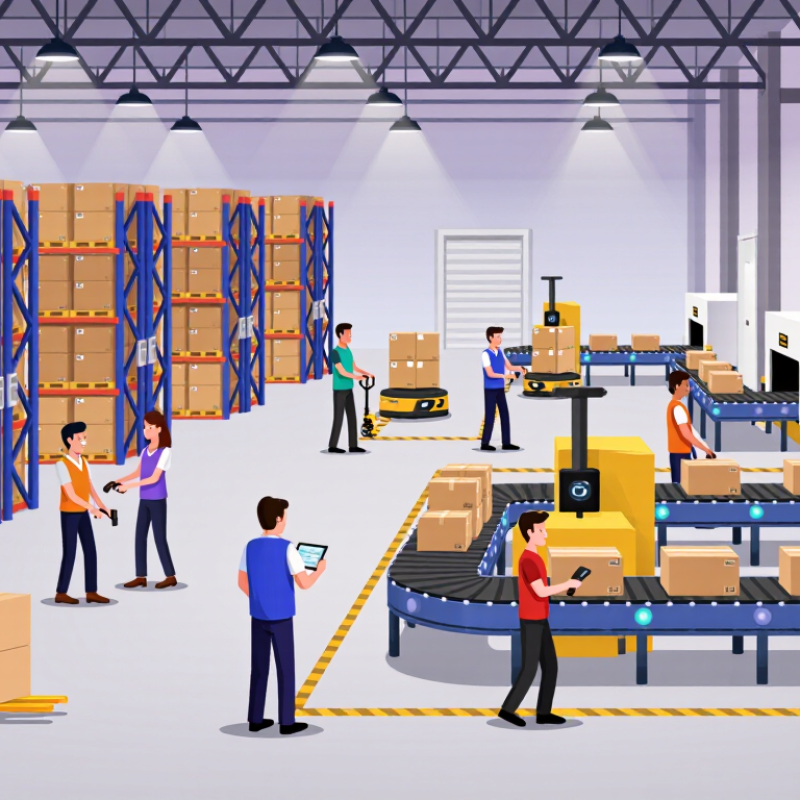
Why Do Key Factors Affect Warehouse Logistics Efficiency?

What Warehouse Logistics Efficiency Means and Why It Matters

Warehouse logistics efficiency means moving goods accurately, safely, and with minimal wasted time. It connects receiving, storage, picking, packing, and dispatch. A well-organized warehouse reduces unnecessary walking and prevents inventory from waiting in the wrong location. Every minute matters.

In daily operations, efficiency can be seen on the warehouse floor. Workers should find fast-moving items near packing stations. Clear labels reduce search time and picking errors. Reliable inventory records also prevent orders from being promised without available stock.

Useful measurements include order accuracy, dock-to-stock time, picking speed, and storage utilization. These figures reveal problems that casual observation may miss.

Efficiency matters because it affects customer trust, labor costs, and delivery performance. A delayed receiving process can create empty shelves hours later. Poor picking routes may add several kilometers of walking each shift. Small errors multiply quickly.

However, speed alone is not the goal. Rushed work can increase damage, returns, and employee fatigue. The better approach balances productivity with safe procedures and consistent quality.

In practice, no warehouse performs perfectly. Unexpected deliveries, equipment downtime, and unclear instructions still disrupt plans. Regular reviews help teams question old routines and adjust layouts, staffing, or training based on evidence. Even a simple change, such as placing packing materials beside the workbench, can remove repeated delays.

How Warehouse Layout and Storage Systems Affect Operational Flow

Why Do Key Factors Affect Warehouse Logistics Efficiency?

Warehouse layout shapes every movement, from receiving dock to dispatch door. A short travel path matters when an operator pushes a loaded cart through narrow aisles. The 2024 MHI Annual Industry Report surveyed more than 1,300 supply chain professionals. It found that 55% planned to increase investment in supply chain innovation. Yet technology cannot repair a poor layout. A misplaced fast-moving item still creates repeated walking, congestion, and avoidable handling.

Storage systems should match product velocity, weight, dimensions, and replenishment frequency. High-demand cartons belong near packing stations, while slow-moving stock can use deeper locations. Selective racking offers access, but compact systems may reduce travel and improve space utilization. WERC’s 2024 DC Measures report lists order-picking accuracy around 99.5% as a common leading benchmark. That sounds excellent. However, one wrong carton can still delay a shipment, trigger rework, and damage customer trust.

Practical audits reveal more than drawings. Measure walking distance, queue time, replenishment delays, and aisle blockage during peak hours. Use floor markings, clear location labels, and adjustable shelving where product sizes change often. Layout decisions should be tested with real operators, not only software simulations. I have seen a technically efficient aisle plan fail because turning space was too tight. That mistake deserves review. Efficiency is not simply storing more goods; it is creating a steady flow with fewer stops, safer movements, and reliable order accuracy.

Why Do Key Factors Affect Warehouse Logistics Efficiency?

Warehouse layout and storage systems directly influence travel time, picking productivity, space utilization, and order accuracy. The benchmark values below show typical operational improvements reported when warehouses replace inefficient layouts and conventional storage with organized slotting, selective racking, and automated storage solutions.

Why Inventory Accuracy and Order Processing Speed Are Essential

Inventory accuracy and order processing speed determine whether warehouse work feels controlled or chaotic. A wrong stock record can send a picker to an empty bin. The order then waits, gets rechecked, and may miss its dispatch window. WERC’s 2024 DC Measures report uses order-picking accuracy as a core warehouse benchmark. Its benchmark data places median accuracy near 99.5%, leaving room for costly exceptions. One error per 200 picks still creates dozens of problems in a busy shift.

Accuracy begins at receiving. Staff should scan each carton, confirm the location, and investigate mismatched quantities immediately. Cycle counts should focus on fast-moving and frequently adjusted items. A warehouse review often finds a simple weakness: damaged labels, rushed put-away, or unclear unit measures. These details look minor. They are not.

Processing speed depends on clean information, not only faster workers. The 2024 MHI Annual Industry Report found that 55% of supply chain professionals expected to increase technology investment. A warehouse can use handheld scanning, task prioritization, and live exception queues to reduce avoidable touches. Yet technology cannot repair poor master data. Supervisors should track order cycle time beside accuracy, because speeding up incorrect orders increases rework. The better target is consistent flow: the right item, in the right quantity, moving through the right station. Perfect performance is unlikely. Daily measurement and honest correction are more reliable.

How Technology and Automation Improve Warehouse Performance

Why Do Key Factors Affect Warehouse Logistics Efficiency?

Warehouse technology changes how quickly and accurately goods move. A warehouse management system assigns tasks using live inventory data. Workers can then find products without walking through every aisle. Barcode scanners reduce manual entry errors. Small gains matter.

Automation also improves physical movement. Conveyors carry cartons between storage, picking, and packing areas. Automated vehicles can transport heavy loads across long warehouse floors. Sensors monitor temperature, equipment status, and storage conditions. Managers receive alerts before minor problems become expensive delays.

However, automation is not magic. Poor product data can create perfectly executed mistakes. A wrong item location may send a worker to the wrong shelf repeatedly. Integration problems can also stop several processes at once. Human judgment remains important when orders change suddenly or equipment fails.

In practical warehouse assessments, the best results usually come from combining tools with clear procedures. Staff need training, safe work zones, and realistic performance targets. A dashboard showing speed alone can encourage careless picking. Accuracy, safety, downtime, and employee feedback should be reviewed together. Some systems still require manual checks, and that is not always a weakness. It can protect customers when forecasts, sensors, or inventory counts are imperfect.

Which Workforce and Transportation Factors Shape Efficiency

Why Do Key Factors Affect Warehouse Logistics Efficiency?

Warehouse efficiency depends heavily on people and transportation choices. Skilled workers reduce picking errors and keep aisles moving. However, staffing numbers alone do not guarantee smooth operations. A warehouse may have enough employees, yet lack experienced shift leaders during peak hours.

Training quality matters. Workers who understand slotting, scanning, and loading sequences make faster decisions. Cross-trained employees also help when absenteeism suddenly affects a shift. In practice, short daily briefings can prevent repeated mistakes. A missed pallet label may delay an entire truck. That detail is easy to underestimate. Transportation adds another layer. Reliable arrival windows help supervisors balance docks, labor, and storage space. Route planning should consider traffic, weather, delivery distance, and vehicle capacity. Poor loading order can create extra handling inside the warehouse. It also increases waiting time for drivers.

Tips: Track picking accuracy, loading time, dock waiting, and late departures each week. Compare the results by shift and route. Adjust schedules using real data, not assumptions. Keep communication direct between warehouse teams and drivers. Small process changes often produce measurable gains.

Our early staffing plan looked efficient on paper, but it ignored fatigue near the final hours. Productivity fell, although attendance remained strong. That experience showed an important weakness: efficiency needs regular review. Workforce planning and transportation planning must work together, not as separate departments.

Why Do Key Factors Affect Warehouse Logistics Efficiency? - Which Workforce and Transportation Factors Shape Efficiency

Category Key Factor Operational Measure Typical Reference Range How It Shapes Efficiency Efficiency Priority
Workforce Labor utilization Paid hours spent on productive warehouse tasks 75–90% Higher utilization increases throughput without adding equivalent labor hours; excessive utilization can increase fatigue and errors. High
Workforce Picking productivity Order lines picked per labor hour 60–150 lines/hour Travel distance, item profile, storage design, equipment, and worker experience directly affect order cycle time. High
Workforce Training and cross-skilling Percentage of workers qualified for two or more warehouse processes 30–70% A broader skill base makes it easier to balance labor between receiving, picking, packing, and shipping during demand peaks. High
Workforce Absence and turnover Unplanned absence or annual employee turnover 5–15% absence; 20–40% turnover Staff shortages increase overtime, temporary labor dependence, training time, and the risk of missed service targets. Critical
Workforce Order accuracy Correct orders as a percentage of total orders 98.5–99.9% Accurate picking reduces rework, returns, customer-service contacts, and additional transportation movements. Critical
Transportation Vehicle load utilization Used cubic capacity or weight capacity per vehicle 75–90% Better load consolidation lowers cost per shipment and reduces the number of trips required for the same volume. High
Transportation Dock dwell time Average time a vehicle remains at the warehouse 30–120 minutes Long dwell times reduce dock availability, delay departures, and create congestion in staging and yard areas. High
Transportation Appointment adherence Shipments arriving or departing within the scheduled time window 90–98% Reliable arrival times improve labor planning, dock scheduling, inventory flow, and outbound service performance. High
Transportation Route stop density Average deliveries per route or operating hour 8–20 stops/route Higher stop density spreads fixed vehicle and driver costs across more deliveries, provided service windows remain achievable. High
Transportation On-time delivery Deliveries completed within the promised time window 95–99% On-time performance reflects the combined effect of warehouse release speed, route planning, traffic, vehicle availability, and delivery execution. Critical
Transportation Empty or unproductive mileage Distance traveled without freight or a revenue-generating stop 5–20% of total mileage Reducing empty mileage lowers fuel use, driver hours, vehicle wear, and transportation cost per delivered unit. High

Note: The ranges are commonly used operational reference ranges for warehouse and transport benchmarking. Actual results vary by facility size, product characteristics, order profile, geography, service level, and operating model.

FAQS

What does warehouse logistics efficiency mean?

It means moving goods accurately, safely, and with little wasted time. It covers receiving, storage, picking, packing, and dispatch. Every minute matters.

Which measurements reveal warehouse problems?

Track order accuracy, dock-to-stock time, picking speed, storage utilization, walking distance, queue time, and replenishment delays. Casual observation can miss recurring delays.

Why does warehouse efficiency matter?

It supports customer trust, labor control, and reliable deliveries. A delayed receiving process can create empty shelves hours later. Small errors multiply quickly.

How does layout improve operational flow?

Place fast-moving cartons near packing stations. Keep turning space wide enough for loaded carts. Clear routes reduce walking, congestion, and repeated handling. A drawing alone is not enough.

How should storage systems match inventory?

Match locations to product velocity, weight, dimensions, and replenishment frequency. Use accessible positions for high-demand cartons. Deeper locations may suit slow-moving stock.

Can technology improve warehouse accuracy and speed?

Yes. Live inventory systems guide tasks, while barcode scanning reduces manual entry errors. Conveyors and automated vehicles can shorten movement time. Small gains matter.

What are the risks of relying too much on automation?

Automation can repeat bad data perfectly. Wrong locations may send workers to the wrong shelf. Equipment failures can stop several processes. Human checks still matter.

How can a warehouse balance speed and safety?

Set targets for productivity, accuracy, safety, downtime, and worker feedback. Rushed picking can cause damage, returns, and fatigue. Faster is not always better.

What simple changes can remove repeated delays?

Place packing materials beside the workbench. Add floor markings and clear location labels. Adjust shelving when product sizes change. Test changes with real operators.

Why should warehouse routines be reviewed regularly?

Unexpected deliveries, downtime, and unclear instructions disrupt plans. Regular reviews expose weak routines. Some improvements fail in practice, so teams must question their assumptions.

Conclusion

Warehouse logistics efficiency refers to how effectively a warehouse receives, stores, manages, and ships goods while minimizing time, errors, and operating costs. Understanding what factors affect warehouse logistics efficiency is essential for improving daily performance and meeting customer expectations. A well-planned layout, suitable storage systems, and clear product positioning can reduce unnecessary movement and create a smoother operational flow. At the same time, accurate inventory records help prevent stock discrepancies, while fast and organized order processing supports timely deliveries.

Technology and automation can further improve warehouse performance by assisting with inventory tracking, data management, picking, and workflow coordination. However, equipment alone is not enough. A skilled, well-trained workforce is necessary to operate systems safely and efficiently, while effective transportation planning ensures goods move reliably between suppliers, warehouses, and customers. By coordinating facility design, inventory control, technology, employees, and transportation, businesses can build a more productive, responsive, and cost-effective warehouse operation.

Ethan

Ethan

Ethan is a seasoned marketing professional with a deep expertise in our company's innovative product line. With a passion for sharing knowledge and insights, he takes the lead in regularly updating our corporate blog, where he explores industry trends, product features, and effective marketing......