What Are the Latest Warehouse Automation Trends in China?

Time:2026-10-31 Author:Sienna
0%

China’s warehouse automation story is moving beyond isolated robots. In e-commerce hubs, distribution centers, and factory warehouses, operators are combining autonomous mobile robots, automated storage and retrieval systems, machine vision, and software that coordinates inventory. The details matter: a mobile robot can carry a tote between picking zones, while a warehouse management system assigns the next task. When these systems communicate well, workers spend less time walking and searching.

So, what are the latest trends in warehouse automation? In China, a key shift is toward connected, flexible operations rather than one large, fixed installation. AI-assisted forecasting and vision tools can help teams respond to changing order patterns. Yet adoption varies by site, and the newest equipment does not guarantee smoother work. Poor data, awkward layouts, or disconnected software can turn an impressive pilot into an expensive bottleneck. That is the uncomfortable part.

The International Federation of Robotics’ former president, Marina Bill, has said, “Robots are becoming increasingly accessible to companies of all sizes.” That observation helps explain why automation is no longer limited to the largest facilities. The practical question is which tasks justify it: high-volume picking, repetitive transport, or handling peak-season surges. A careful rollout starts with one measurable process, such as reducing tote travel between storage and packing, then checks safety, uptime, and labor impact. Small steps matter. China’s market is fast-moving, but each warehouse has different products, buildings, and service needs. This guide examines the technologies gaining attention, the operational choices behind them, and the trade-offs that deserve a closer look.
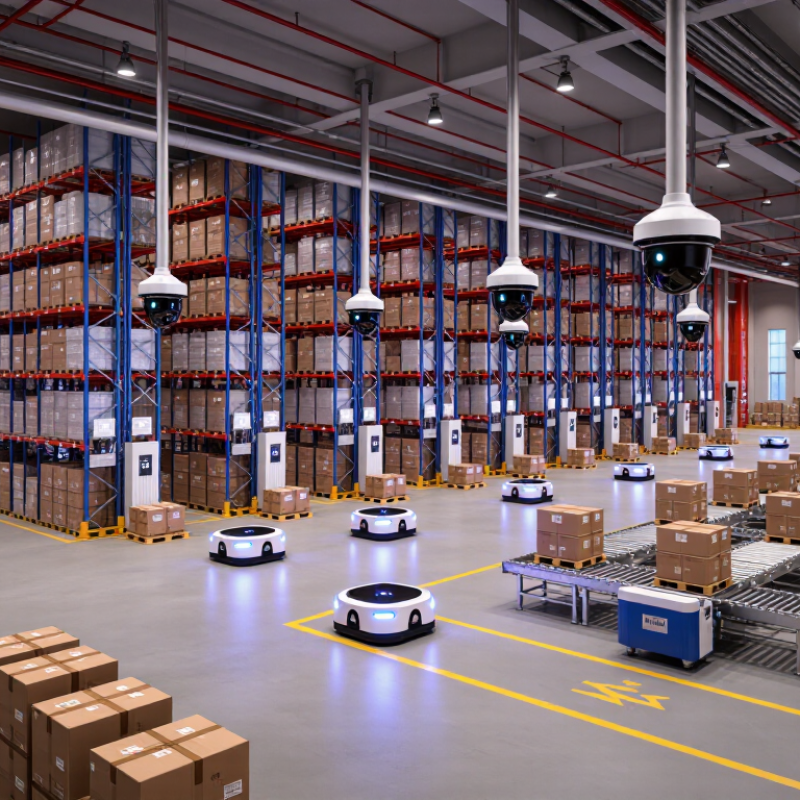
What Are the Latest Warehouse Automation Trends in China?

China’s Warehouse Automation Landscape and Key Drivers

China’s warehouse automation landscape is shaped by online retail, manufacturing, and sharply varying regional demand. Large coastal fulfillment centers may need rapid carton sorting and dense storage. Smaller inland facilities may prioritize dependable pallet movement. The pressures differ.

Key drivers include tighter delivery windows, rising expectations for order accuracy, and the need to handle seasonal peaks without expanding floor space. Warehouses are adopting automated storage and retrieval systems, mobile robots, and conveyor-based sorting, often alongside warehouse software that coordinates inventory and labor. A typical improvement can be quite practical: fewer manual transfers between receiving, storage, and packing. Small steps matter. Yet older buildings, uneven data quality, and costly system integration can limit results. Automation works best when processes are mapped before equipment is installed, not after. That is easy to say. It is harder when a live operation cannot pause for a redesign. Managers should compare throughput, maintenance needs, and staff training requirements, then test changes in one zone before expanding. A faster machine alone does not guarantee a smoother warehouse.

What Are the Latest Warehouse Automation Trends in China?

China’s growing parcel volumes are increasing demand for automated sorting, conveying, storage and order-fulfillment systems. Annual express delivery volume rose from 63.5 billion parcels in 2019 to 174.5 billion in 2024.

Source: State Post Bureau of China, annual postal industry statistics. Parcel volume is an indicator of fulfillment demand, not a direct measure of warehouse automation adoption.

Core Technologies Powering Automated Warehouses

Automated warehouses in China increasingly combine mobile robots, automated storage and retrieval systems, machine vision, and warehouse control software. Each tool handles a different constraint: robots move totes across busy floors, while sensors confirm locations and flag blocked routes. The software layer coordinates picking, replenishment, and dispatch. It must also respond when orders change mid-shift.

Scale matters. The International Federation of Robotics reported 276,288 industrial robot installations in China in 2023, or 51% of global installations. This is not a warehouse-only figure, but it shows the country’s broad robotics capacity.

MHI’s 2024 Annual Industry Report found that 55% of surveyed supply-chain professionals planned to adopt robotics and automation within five years.

Still, software matters. A fast robot can simply move congestion elsewhere if task priorities are poorly set. Operators should test systems against real aisle widths, peak-hour order patterns, and charging needs—not only ideal demonstrations.

Some sites will need simpler upgrades before full automation. That can be the wiser choice.

Emerging Trends in Robotics, AI, and Smart Systems

Chinese warehouses are combining mobile robots, robotic arms, and AI-enabled software to move goods with less manual handling. Autonomous mobile robots can carry totes between picking stations, while vision systems help identify parcels with different shapes or labels. In busy facilities, small gains matter: a shorter walking route or fewer misplaced cartons can save time across hundreds of daily orders. It depends.

AI tools are also being used to forecast demand, adjust replenishment, and flag unusual delays. When these systems connect with warehouse control software, managers can see queues forming before a loading area becomes crowded. Some operators are testing digital models of their facilities to compare layouts before moving equipment. But the quality of any forecast depends on clean, timely data; an inaccurate inventory record can send automation confidently in the wrong direction. That deserves more attention.

The trend is not simply to add more robots. Facilities need clear safety procedures, reliable network coverage, and staff who can maintain equipment and interpret system alerts. Smaller warehouses may gain more from targeted automation than from a fully integrated setup. The technology can look impressive in a demonstration, yet perform unevenly during peak season. Careful trials and honest performance checks remain essential.

What Are the Latest Warehouse Automation Trends in China? — Emerging Trends in Robotics, AI, and Smart Systems

Trend What It Involves Typical Warehouse Uses Current Direction Practical Considerations
Autonomous mobile robots (AMRs) Mobile robots use onboard sensors and navigation software to move through facilities and transport goods or containers. Order picking, replenishment, tote transport, and movement between work areas. Deployment is expanding in operations that need flexible routes or incremental automation without extensive fixed conveyors. Requires safe traffic rules, reliable maps, charging plans, and integration with warehouse control software.
Automated guided vehicles (AGVs) Vehicles follow defined routes or guidance systems to move pallets, loads, or other materials. Repetitive pallet transfers, production-to-storage moves, and predictable transport loops. AGVs remain relevant for stable, repeatable workflows; many facilities use them alongside more flexible mobile robots. Route changes, mixed vehicle traffic, load handling, and emergency-stop procedures need careful design.
Goods-to-person systems and automated storage Storage equipment brings bins, totes, or pallets to stationary workers or automated picking stations. E-commerce fulfillment, small-item storage, parts distribution, and high-density inventory areas. Systems increasingly combine automated storage and retrieval with picking stations and software-directed replenishment. The business case depends on inventory profile, order patterns, facility layout, and the cost of modifying existing buildings.
AI-assisted planning and task allocation Algorithms use operational data to support demand forecasting, slotting, labor planning, and the assignment of tasks to people or machines. Wave planning, replenishment prioritization, picking sequence optimization, and workload balancing. The focus is shifting from isolated automation to coordinating decisions across warehouse processes. Results depend on accurate master data, clean event records, integration, and human oversight of exceptions.
Machine vision and intelligent identification Cameras and image-processing systems identify items, read labels, inspect packages, or guide robotic handling. Barcode and label reading, parcel dimensioning, quality checks, and item recognition at picking or sorting points. Vision is being applied to reduce manual identification and support handling of a wider range of packages and objects. Performance can be affected by occlusion, reflective packaging, inconsistent labels, lighting, and unfamiliar item shapes.
Robotic picking and depalletizing Robotic arms use grippers, sensors, and perception software to pick, place, sort, or unload goods. Case handling, parcel sorting, pallet unloading, and repetitive picking of known product ranges. Adoption is most practical in structured tasks, with improvements in perception helping address more variable items. Gripper selection, package variation, throughput targets, and safe work-cell design are key factors.
Warehouse execution and fleet orchestration Software coordinates warehouse tasks, equipment, robot fleets, and inventory events across connected systems. Managing mixed fleets, task queues, charging, congestion, and handoffs between automation and workers. Interoperability and unified operational visibility are increasingly important as facilities add equipment from different categories. Interfaces, cybersecurity, system ownership, and clear responsibility for upgrades should be addressed early.
Digital twins and simulation Digital models represent warehouse layouts, processes, or equipment to test scenarios and analyze operational changes. Capacity planning, layout evaluation, robot-route testing, and assessment of peak-period operations. Simulation is increasingly used to evaluate automation plans before physical deployment and to support ongoing optimization. A useful model needs current layout and process data; simulation results should be validated against real operations.
Connected sensors and condition monitoring Sensors collect equipment, environmental, and movement data for monitoring and maintenance planning. Tracking equipment status, monitoring conveyor or vehicle conditions, and identifying abnormal operating patterns. Facilities are linking operational data more closely to maintenance and performance management. Sensor calibration, data security, alert quality, and maintenance-team response processes matter as much as connectivity.
Human-robot collaboration and safety Workflows are designed for people and automated equipment to operate in the same facility under defined safety controls. Shared aisles, picking stations, loading areas, and tasks where workers handle exceptions or variable items. Automation projects increasingly emphasize safe interaction, worker training, and task redesign alongside equipment installation. Risk assessment, traffic separation, signage, operating procedures, and compliance with applicable safety standards are essential.

Note: These are broad industry directions, not a claim that every warehouse in China uses every technology. Suitability and adoption vary by sector, facility size, order profile, and investment requirements.

Applications Across Industries and Warehouse Operations

Across China, warehouse automation is increasingly designed around the work each facility actually handles. E-commerce sites use goods-to-person systems and autonomous mobile robots to move totes between storage and picking stations. A worker can scan an order, pick several small items, and send the tote onward without walking the full aisle. Manufacturing warehouses use automated storage and retrieval systems to deliver components to production lines on schedule. Cold-chain operators may rely on temperature monitoring and automated handling to reduce unnecessary door openings. The fit matters.

Retail distribution centers often need fast sorting for mixed-size parcels, while food and consumer-goods warehouses benefit from pallet handling and inventory visibility. Warehouse software can connect task assignment, stock records, and equipment status, helping supervisors spot delays before a loading bay backs up. But integration takes planning. Older layouts, uneven inventory data, and peak-season demand can limit the gains. Automation is not a cure-all; a poorly chosen system may simply move congestion to another point.

Tips: Map order patterns and travel paths before selecting equipment. Test a small zone with real products, including awkward cartons and replenishment tasks. Track pick accuracy, waiting time, and downtime—not just the number of robots. Leave room for manual work during exceptions. That trade-off is easy to underestimate.

Challenges, Safety Standards, and Future Developments

What Are the Latest Warehouse Automation Trends in China?
Challenges, Safety Standards, and Future Developments

China’s warehouses are moving beyond standalone conveyors toward coordinated mobile robots, shuttle systems, machine vision, and warehouse software. The State Post Bureau’s 2023 Statistical Bulletin reported 132.07 billion express parcels, up 19.4% year on year. IFR’s World Robotics 2024 recorded 276,288 industrial robot installations in China in 2023. That figure covers factories, not warehouses, but signals a mature automation ecosystem. Scale is rising. Yet peak-season parcel surges can expose weak software integration and bottlenecks at loading docks.

Real sites are less tidy than diagrams. Uneven floors, narrow aisles, Wi-Fi dead zones, and pedestrian crossings can disrupt robot routes. ISO 3691-4:2020 offers a relevant safety reference for driverless industrial trucks and their systems; operators must also check applicable local requirements. Marked walkways, tested emergency stops, speed limits, and routine maintenance help reduce risk. One gap deserves reflection: installing sensors does not guarantee safe behavior when people change routes or storage layouts.

Tips: Walk the site before choosing equipment. Test a small zone during a busy shift, then track throughput, stoppages, and near misses. Future systems will likely coordinate robots, lifts, and people more dynamically, with simulation tools supporting layout changes. Human oversight will remain essential.

Automation still needs better questions.

FAQS

Which technologies are commonly used in automated warehouses in China?

Facilities combine mobile robots, storage systems, machine vision, and warehouse software. Each handles different tasks.

How do mobile robots help warehouse teams?

They carry totes between picking stations and reduce some walking. Narrow aisles can still slow them down.

What can AI-enabled warehouse software do?

It can forecast demand, adjust replenishment, and flag delays. Poor inventory data can still mislead it.

Why does warehouse layout matter when choosing automation?

Aisle width, uneven floors, Wi-Fi coverage, and charging space affect performance. A floor walk can reveal trouble.

What safety measures support automated warehouse operations?

Marked walkways, speed limits, tested emergency stops, and routine maintenance help manage risks. Sensors alone are not enough.

How should a warehouse test new automation?

Start in a small zone during a busy shift. Track throughput, stoppages, and near misses.

Do smaller warehouses always need a fully automated setup?

No. Targeted upgrades may suit some sites better. More robots can shift congestion rather than remove it.

What is a key lesson from warehouse automation trials?

Test systems with real orders and changing layouts. Demonstrations look tidy. Peak shifts do not.

Conclusion

China’s warehouse automation landscape is evolving as businesses seek faster fulfillment, greater accuracy, and more efficient use of space and labor. What are the latest trends in warehouse automation? Key developments include wider use of autonomous mobile robots, automated storage and retrieval systems, machine vision, and AI-powered software that coordinates inventory, routes, and workloads. Connected sensors and real-time data are also helping facilities respond more quickly to changes in demand.

These systems are being adopted across e-commerce, manufacturing, retail, and logistics, supporting tasks such as receiving, sorting, picking, packing, and shipping. At the same time, organizations must address investment costs, integration with existing operations, workforce training, and reliable system maintenance. Safety remains essential: clear operating procedures, appropriate safeguards, and effective cooperation between people and machines help reduce risks. Future progress is likely to focus on more flexible, interoperable systems that improve productivity while keeping warehouse operations safe and adaptable.

Sienna

Sienna

Sienna is a skilled marketing professional with a deep expertise in our company’s core products and services. With a passion for innovation and detail, she plays a pivotal role in crafting insightful blog posts that not only highlight the unique features of our offerings but also provide valuable......